As you might be aware, the Lunar New Year has just passed us by, ushering in the Year of the Ox. It is traditionally held that this sign is one of prosperity through fortitude and hard work. The Ox is patient and, once having set its mind upon a goal, is hard to dissuade. It is certainly an auspicious sign for those of us with large plans for the coming year.
It has been my observation that there’s been a quiet rumbling in the hills of the Old School Renaissance in recent months. Like portents to some grand event, the signs are slowly pointing to a pending eruption. You can get a glimpse of these signs in various places: the blogs, the forums, and the fan publications all bear traces as to what may be in store for us in the coming year. I’m of course speaking of the renewed interest in the dungeon as the playing field of choice for the old school gamers.
There was a lot of banter back and forth last year about the return to the sandbox campaign and the desire to step away from the regimented and structured adventures and campaign worlds that had come into vogue during the years of 3.5. The return to the hex crawl as a valid form of adventuring received much renewed interest in the forums and in the pages of Fight On! While this is all well and good, it think that it time to move back underground and really start digging back down to the roots of the game.
I personally started this blog as an attempt to chronicle my own journey back to this most primal part of the game we all love, mentioning that my attempt was guided by the fact that I had never completed my journeyman’s “masterpiece” of a megadungeon of my own during my initiation into the hobby. While I’ve taken a few temporary detours along the way, that project has remained the centerpiece of the blog and will most likely to continue to remain so for the foreseeable future. Thanks to the works of Sham and Chgowiz, I’ve found a way to share with you my style of dungeon building while still maintaining a cloak of secrecy around my own main megadungeon. Stonehell will remain my example dungeon while I continue to work away on Gloomrisk for actual player consumption.
What has struck me most during this entire process of dungeon building is how intimately personal one’s dungeon becomes as work proceeds in it. In many ways, the dungeon is the singular representation of your skills and style of design and refereeing. On one hand, the dungeon is a very good way to show others the quality of your chops when it comes down to what you do behind the screen. On the other hand, however, it’s not always an accurate representation of your skills. As many a module attests, an extremely well-written dungeon does not always make an exciting locale for adventuring, nor does a poorly written one guarantee a poor quality adventure. The ability of an individual referee to bring such a setting to life is best measured in actual play, rather than by the static example of his notes and maps.
Despite this limitation, I still feel that the dungeon is a viable way for a referee to demonstrate his or her creativity and love for the game. It’s a shame that more referees aren’t forthcoming with examples of their own dungeons for a larger audience to view. This reticence is most likely two-fold. For one, any good referee doesn’t want to tip his hand to his players, so keeping information under wraps and off the grid is only a sensible precaution to keep one or more of his gaming group from stumbling upon it. Secondly, as I mentioned above, the dungeon is a very personal creation. Showing it to the world takes a bit of chutzpah that not everyone might possess.
Luckily, this hesitance seems to be lessening a bit. A change has been building, both in interest in the dungeon and the desire to share ones own construction or participate in a communal project of dungeon design. In just the past few weeks, there have been signs that more referees intend to share their work with a larger audience. Sham posted the first level of the Dismal Depths over the past month. Joseph has begun his attempt to produce a homebrew version of Castle Greyhawk. James is pondering the idea of releasing Dwimmermount in some product form. Fight On! magazine continues its efforts to detail “The Darkness Beneath,” its shared megadungeon project, in the pages of that publication. I’ve been adding my own fuel to the fire with my Stonehell updates as well.
I believe that this is a trend worth building on and one that more people should consider adding their own efforts to. The dungeon is the fundamental heart to this game, but there’s been a growth away from it over the years or at least a change in what exactly the word “dungeon” truly means. As Sham pointed out recently, there was a time when the word meant a sprawling labyrinth for the players to explore and the prefix “mega” was superfluous. While it might be too late to turn back the clock on the need for the word “megadungeon,” it’s not too late to revive it as a valid adventure setting. When 3rd edition debuted, the ad campaign promised us that the game was going “Back to the Dungeon.” Sadly, this wasn’t to be the case. If 3.5 has any legacy, it’s going to be the structured Adventure Path and not a return to the dungeon. It’s time to really take the game back to the dungeon, by which I mean the huge subterranean setting free of a metaplot and the need for sensibility and logical design.
My challenge to you for 2009 is to put your own dungeons on the table. Make a level or three available through your blog if you have one. Submit an excerpt to Fight On! or Knockspell. Polish up the whole thing and make it a .pdf available through the Old School Renaissance Publishing Group on Lulu. It doesn’t even have to me your most recent creation. Pull out some dungeon from long ago and show it to the world. Just get it out there. Chances are that everyone has something that could benefit others by being seen. I personally love mining other dungeons for ideas and inspiration, and the more that are out there for everyone to see, the more this trend will grow. And that’s a good thing for all of us.

Monday, February 2, 2009


Friday, January 30, 2009
Stonehell: Kobold Korners
With this latest upload, the first level of Stonehell, my Moldvay/Labyrinth Lord megadungeon, is now complete. You can get your hands on Stonehell: Level 1D here.
Let me state for the record that I’m not a big fan of the common kobold. When it comes to less than one HD humanoids to throw at a party, I’m a goblin-type of guy. I much prefer the stinky, flat-footed orange-green goblins to the rusty scaled kobold when I need something to challenge the 1st level party. That being said, however, the kobolds of Stonehell have grown on me. Largely this is due to my decision to make them a little something other than just walking experience points for the party to grind on at the beginning of their exploits. I like that the kobolds have another useful purpose in the halls of Stonehell and look forward to revisiting them in later levels as they serve in their capacity as custodians, trap repairmen, provisioners, and go-between for the bigger, stronger races.
But before I could say farewell to the scaly buggers for a bit, I really wanted to emphasize their role in Stonehell in a way that the potential party wouldn’t soon forget. Thus sprang to life the concept of “Kobold Korners.” Every party eventually comes to the point where they need to resupply and recoup. Usually this entails a trip back to the nearest town and a visit to the local tavern. While that option certainly exists for the explorers of Stonehell, I wanted to explore other options.
It started simple enough. The idea of a “scaly Casablanca” came to mind. I wanted to introduce a place where a tentative peace exists for the purpose of stimulating trade and to provide a safe haven for the various denizens of Stonehell to pursue recreation and cut deals and agreements. As the kobolds are the go-betweens for the races, it only made sense that their section of the dungeon would serve such a purpose. Readers familiar with the Forgotten Realms Undermountain megadungeon will recognize that Skullport served a similar function in that locale. But rather than wait until the 3rd level down to introduce such a place, I figured I’d introduce it much earlier.
The reasons that I decided to introduce this safe haven early are as follows: One, I wanted to demonstrate the unique role that the kobolds play in the dungeon. While the adventurers might run into them as they carry out their other duties on this level, I think once the party gets a look at Kobold Korners (which is of course not what the kobolds call their home), they’ll have a better understanding that the little guys might be more than they anticipated. Two, I wanted to make the players realize early that their actions in the dungeon have long-term effects. If the party has been in full-on “stabby mode” through the earlier sections of the dungeon, they’re about to find that all those dead kobolds left in their wake had a lot of friends. If the players have been a little more “old-school” in their exploits, occasionally parlaying and dealing with the kobolds in a less lethal manner, they’ll find that they have access to a somewhat safe place to rest and resupply.
There are hazards to relying on the Kobold Korners for safety and resupply, of course. Equipment might be cheaper than back in town, but you get what you pay for. There is a tentative truce between visitors to this section of the dungeon, but that’s not guaranteed. Even the gang of bugbears employed by the kobolds as a police force/goon squad can’t always keep the peace, and the dead body of a murdered shopper has more than once shown up for sale in one form or another in the market.
Of course, being the kind soul that I am, the party can avoid Kobold Korners completely during their exploits. There are at least four other means by which they can access Level Two besides the grand stairs in Kobold Korners, so enraging the kobolds isn’t a complete roadblock in their path of exploration. But it will mean that the party won’t a get a crack at a forgotten section of dungeon that waits to be discovered and has a few useful goodies for the taking. Oh well. Such are the consequences of rash actions in the dungeon depths.
Let me state for the record that I’m not a big fan of the common kobold. When it comes to less than one HD humanoids to throw at a party, I’m a goblin-type of guy. I much prefer the stinky, flat-footed orange-green goblins to the rusty scaled kobold when I need something to challenge the 1st level party. That being said, however, the kobolds of Stonehell have grown on me. Largely this is due to my decision to make them a little something other than just walking experience points for the party to grind on at the beginning of their exploits. I like that the kobolds have another useful purpose in the halls of Stonehell and look forward to revisiting them in later levels as they serve in their capacity as custodians, trap repairmen, provisioners, and go-between for the bigger, stronger races.
But before I could say farewell to the scaly buggers for a bit, I really wanted to emphasize their role in Stonehell in a way that the potential party wouldn’t soon forget. Thus sprang to life the concept of “Kobold Korners.” Every party eventually comes to the point where they need to resupply and recoup. Usually this entails a trip back to the nearest town and a visit to the local tavern. While that option certainly exists for the explorers of Stonehell, I wanted to explore other options.
It started simple enough. The idea of a “scaly Casablanca” came to mind. I wanted to introduce a place where a tentative peace exists for the purpose of stimulating trade and to provide a safe haven for the various denizens of Stonehell to pursue recreation and cut deals and agreements. As the kobolds are the go-betweens for the races, it only made sense that their section of the dungeon would serve such a purpose. Readers familiar with the Forgotten Realms Undermountain megadungeon will recognize that Skullport served a similar function in that locale. But rather than wait until the 3rd level down to introduce such a place, I figured I’d introduce it much earlier.
The reasons that I decided to introduce this safe haven early are as follows: One, I wanted to demonstrate the unique role that the kobolds play in the dungeon. While the adventurers might run into them as they carry out their other duties on this level, I think once the party gets a look at Kobold Korners (which is of course not what the kobolds call their home), they’ll have a better understanding that the little guys might be more than they anticipated. Two, I wanted to make the players realize early that their actions in the dungeon have long-term effects. If the party has been in full-on “stabby mode” through the earlier sections of the dungeon, they’re about to find that all those dead kobolds left in their wake had a lot of friends. If the players have been a little more “old-school” in their exploits, occasionally parlaying and dealing with the kobolds in a less lethal manner, they’ll find that they have access to a somewhat safe place to rest and resupply.
There are hazards to relying on the Kobold Korners for safety and resupply, of course. Equipment might be cheaper than back in town, but you get what you pay for. There is a tentative truce between visitors to this section of the dungeon, but that’s not guaranteed. Even the gang of bugbears employed by the kobolds as a police force/goon squad can’t always keep the peace, and the dead body of a murdered shopper has more than once shown up for sale in one form or another in the market.
Of course, being the kind soul that I am, the party can avoid Kobold Korners completely during their exploits. There are at least four other means by which they can access Level Two besides the grand stairs in Kobold Korners, so enraging the kobolds isn’t a complete roadblock in their path of exploration. But it will mean that the party won’t a get a crack at a forgotten section of dungeon that waits to be discovered and has a few useful goodies for the taking. Oh well. Such are the consequences of rash actions in the dungeon depths.
Wednesday, January 28, 2009
R'Nisian Glyphs - Part II
This is the second part of a two-part series detailing the variant versions of the 3rd level clerical spell, glyph of warding, in my homebrew campaign world of R'Nis. The first part may be found here.
Level 7 Glyphs
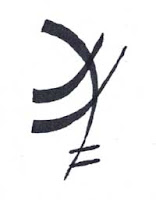 Eram’s Passing
This glyph destroys paper, parchment, scrolls and books by causing them to quickly age to dust. Any paper item in the possession of the victim of this glyph must make a saving throw vs. magical fire or be destroyed. This glyph is often used to protect repositories of knowledge where it would be better for that knowledge to be destroyed than to fall into the wrong hands.
 Vaughn’s Disproval
This glyph is the bane to any item made of metal, including iron, steel, silver, gold, and other precious alloys. When this glyph is triggered, all items in the possession of the victim of this glyph must save vs. spell or be destroyed as if touched by a rust monster (q.v.). Armor, weapons, wealth, buckles, iron spikes, etc. all subject to the effects of this glyph.
 Absence of Memory
The victim of this glyph must make a saving throw vs. spells or lose all memory of the past week’s events. In the case of spell-casters, this memory loss includes any spells or prayers currently memorized by the caster. Further effects might be suffered by the character at the referee’s discretion.
Level 9 Glyphs
 Thorn’s Betrayal
This potent glyph has the ability to permanently strip away 1 point from any single ability for each 2 levels of the casters. The victim of this glyph must make a saving throw vs. spells or suffer the loss from an ability score determined by the caster at the time of the glyph’s creation. A successful saving throw indicates no effect.
 The Ineffable Sign
This glyph tears at the very sanity of whomever is unlucky enough to gaze upon it. The victim of this glyph must make a saving throw vs. spells or be struck insane by the knowledge conveyed by this glyph. An insane character babbles, froths at the mouth, tears at his own hair, curls into a fetal position, or suffers the effects of a confusion spell at the referee’s discretion. This insanity may only be cured by a heal, restoration, or wish spell.
 The Endless Void
This glyph has the power to drain the life essence of whomever triggers its power. The victim of this glyph must make a saving throw vs. spell or lose 1 life level if the caster was less than 20th level. If the caster of this glyph was 20th or more levels in ability, the victim of this glyph suffers a loss of 2 life levels instead. Any lost level may be regained through the application of a restoration spell or wish.
Level 7 Glyphs
 Eram’s Passing
This glyph destroys paper, parchment, scrolls and books by causing them to quickly age to dust. Any paper item in the possession of the victim of this glyph must make a saving throw vs. magical fire or be destroyed. This glyph is often used to protect repositories of knowledge where it would be better for that knowledge to be destroyed than to fall into the wrong hands.
 Vaughn’s Disproval
This glyph is the bane to any item made of metal, including iron, steel, silver, gold, and other precious alloys. When this glyph is triggered, all items in the possession of the victim of this glyph must save vs. spell or be destroyed as if touched by a rust monster (q.v.). Armor, weapons, wealth, buckles, iron spikes, etc. all subject to the effects of this glyph.
 Absence of Memory
The victim of this glyph must make a saving throw vs. spells or lose all memory of the past week’s events. In the case of spell-casters, this memory loss includes any spells or prayers currently memorized by the caster. Further effects might be suffered by the character at the referee’s discretion.
Level 9 Glyphs
 Thorn’s Betrayal
This potent glyph has the ability to permanently strip away 1 point from any single ability for each 2 levels of the casters. The victim of this glyph must make a saving throw vs. spells or suffer the loss from an ability score determined by the caster at the time of the glyph’s creation. A successful saving throw indicates no effect.
 The Ineffable Sign
 This glyph tears at the very sanity of whomever is unlucky enough to gaze upon it. The victim of this glyph must make a saving throw vs. spells or be struck insane by the knowledge conveyed by this glyph. An insane character babbles, froths at the mouth, tears at his own hair, curls into a fetal position, or suffers the effects of a confusion spell at the referee’s discretion. This insanity may only be cured by a heal, restoration, or wish spell.
 The Endless Void
 This glyph has the power to drain the life essence of whomever triggers its power. The victim of this glyph must make a saving throw vs. spell or lose 1 life level if the caster was less than 20th level. If the caster of this glyph was 20th or more levels in ability, the victim of this glyph suffers a loss of 2 life levels instead. Any lost level may be regained through the application of a restoration spell or wish.
Monday, January 26, 2009
R'Nisian Glyphs - Part I
“Typical glyphs shock for 2 points of electrical damage per level of the spell caster, explode for a like amount of fire damage, paralyze, blind or even drain a life energy level (if the cleric is of high enough level to cast this glyph).” – 1st Edition Players Handbook p. 47.
That’s the extent of the spell description for the 3rd level clerical spell glyph of warding in the 1st edition Players Handbook when it comes to detailing the actual effects of the spell. Like a lot of earlier versions of the rules of the game, there’s a lot of room for the referee to extrapolate on this spell when it comes to his or her particular campaign. First off, the spell states that these are the effects of the “typical glyphs.” By that logic, one must assume that atypical glyphs exist as well. Secondly, the spell mentions that the most potent version of the typical glyph – the one that drains life levels – is only available to a priest that is “high enough level to cast this glyph.” No mention of the actual level required is present, leaving the referee to decide such things for himself.
When I was working away on Gloomrisk (formerly known as The Dungeon Not Yet Named™), I took the opportunity to play around with a few variant versions of glyph of warding to include in the depths of that dungeon. I also wanted to establish a few level guidelines as to when a PC cleric might find himself able to cast these variants. Image my chagrin when I discovered, after completing about 85% of that project, that Larry DiTillio had already covered a lot of this same ground in his article “The Glyphs of Cerilon” in Dragon #50. He’d even included illustrations of specific glyphs along with the article; a step that I had undertaken myself. Rather than being discouraged by this discovery, I did what any decent referee would do: I stole the parts that I liked and added it to my own work.
What follows in this post, as well as in Part 2, is a sample of my glyphs of warding for R’Nis, including my own house-rules for level determination of what glyphs are available to the cleric as he progresses. A total of twelve glyphs are presented in this series, with a few more held in reserve to protect their secrecy from possible delvers into Gloomrisk.
Available Glyphs
Upon reaching the 5th level of experience (deity permitting), the cleric gains access to the prayer, glyph of warding. At 5th level, the cleric may invoke the power of his or her deity to cast two versions of this glyph as determined by the player and the referee. The two initial glyphs must be of the 5th level variety (see below). For each level of experience past the 5th, the cleric gains access to another type of glyph from this list. Upon reaching the 7th and 9th levels of experience, the cleric (with the referee’s permission) may chose a glyph of warding from the appropriate higher level lists. In addition, the cleric may encounter alternate glyphs during his adventures (on scrolls, in prayer books, or some other format). Should this event occur, the cleric may either seek out the guidance of a higher level priest or, if high enough level himself, consult his deity for permission to be able to employ these new forms of glyphs. To gain permission, the cleric must either cast, or have cast for him, the 5th level spell, commune. After doing so, the cleric will learn if he may invoke the powers of his deity to use these glyphs and, in the case of a positive response, may add them to his available repertoire.
5th Level Glyphs Holy Light
The victim of this glyph is struck blind by a radiant light of divine origin. The effect is permanent unless the victim makes a successful save vs. spells. If the saving throw is successful, the victim is only blinded for 2 rounds per level of the caster. A blind character suffers a -4 penalty to its attack rolls, and all opponents gain a +4 bonus to their attack rolls against the character. Righteous Shout
The victim of this glyph is deafened by the sound of celestial horns or demonic roars, depending on the caster’s alignment. The effect is permanent unless the victim makes a successful save vs. spells. If the saving throw is successful, the victim is only deafened for 2 rounds per level of the caster. A deafened character is surprised on a 3 in 6 chance and has a 20% chance to miscast spells. A dispel magic will restore the character’s hearing Agony of the Heretic
The victim of this glyph is wracked with pain, causing them to drop to the ground in agony if a save vs. spells is not made. This pain effectively paralyzes the victim for 2 turns per caster’s level, but causes no actual damage. If the saving throw is successful, this glyph has no effect. Astra’s Caress
The victim of this glyph is subjected to a blast of electrical energy that causes 2 points of damage for each level of the caster. A successful saving throw vs. spell will reduce the damage inflicted by half. Due to the divine nature of this electrical power, the referee may deem that any magical protections the character possesses against electricity offers limited or no protection against this glyph. The Burning Touch of Imix
The victim of this glyph is subjected to a blast of burning flame that causes 2 points of damage for each level of the caster. A successful saving throw vs. spell will reduce the damage inflicted by half. Due to the divine nature of this fiery power, the referee may deem that any magical protections the character possesses against fire offers limited or no protection against this glyph. Uller’s Embrace
The victim of this glyph is subjected to a wave of chilling frost that causes 2 points of damage for each level of the caster. A successful saving throw vs. spell will reduce the damage inflicted by half. Due to the divine nature of this freezing power, the referee may deem that any magical protections the character possesses against cold offers limited or no protection against this glyph.
Sunday, January 25, 2009
The Castle of the Mad Archmage
To paraphrase an old adage: “Disappoint me once; shame on you. Disappoint me twice; shame on me. Disappoint me more than that and I’m going to take matters into my own hands.” Which is exactly what Joseph Bloch of Greyhawk Grognard has done.
After years of being told that the dungeons beneath Castle Greyhawk would eventually be published and the half-assed attempts and aborted efforts to fulfill that promise, Joseph has finally had enough and decided to make good on that empty promise once and for all. In a recent post, Joseph declared that he was going to write up his own fan version of the legendary dungeon and, as of tonight, he’s undertaken to first steps to complete that promise. Labeled as WG-13: The Castle of the Mad Archmage, the first level of Joseph’s homebrew version of Castle Greyhawk is now available.
While this is assuredly not the first time someone has decided to flesh out Gary and Rob’s dungeon for personal use, I’ve got to give Joseph a hell of a lot of credit for not only undertaking this project, but for making his work available to the world at large. There’s no way that any one man’s view of this famed subterranean locale is going to meet the expectations of every Greyhawk fan now that Gary has passed away, but Joseph didn’t let that stop him. After having has a chance to read this first installment, I must say that, while nobody but the Dungeon Master himself could achieve complete success at such an attempt, Joseph does a damn fine job of channeling Gary in his fan version.
For the sake of full disclosure, I’m not a Greyhawk buff and possess only the knowledge earned by a long-ago reading of the World of Greyhawk boxed set and the various module published that were set in that milleau, so Greyhawk maniacs might form other opinions. I’m also one of the people listed in the “Special Thanks To” section of the work, but that didn’t color my opinion. It’s a solid, classic dungeon in the old-school style and well-worth the time to examine for yourself.
I congratulate Joseph on his successful first foray into Gary and Rob’s playground and wish him continued success in the months to come. I’m certainly going to be watching this with great interest.
After years of being told that the dungeons beneath Castle Greyhawk would eventually be published and the half-assed attempts and aborted efforts to fulfill that promise, Joseph has finally had enough and decided to make good on that empty promise once and for all. In a recent post, Joseph declared that he was going to write up his own fan version of the legendary dungeon and, as of tonight, he’s undertaken to first steps to complete that promise. Labeled as WG-13: The Castle of the Mad Archmage, the first level of Joseph’s homebrew version of Castle Greyhawk is now available.
While this is assuredly not the first time someone has decided to flesh out Gary and Rob’s dungeon for personal use, I’ve got to give Joseph a hell of a lot of credit for not only undertaking this project, but for making his work available to the world at large. There’s no way that any one man’s view of this famed subterranean locale is going to meet the expectations of every Greyhawk fan now that Gary has passed away, but Joseph didn’t let that stop him. After having has a chance to read this first installment, I must say that, while nobody but the Dungeon Master himself could achieve complete success at such an attempt, Joseph does a damn fine job of channeling Gary in his fan version.
For the sake of full disclosure, I’m not a Greyhawk buff and possess only the knowledge earned by a long-ago reading of the World of Greyhawk boxed set and the various module published that were set in that milleau, so Greyhawk maniacs might form other opinions. I’m also one of the people listed in the “Special Thanks To” section of the work, but that didn’t color my opinion. It’s a solid, classic dungeon in the old-school style and well-worth the time to examine for yourself.
I congratulate Joseph on his successful first foray into Gary and Rob’s playground and wish him continued success in the months to come. I’m certainly going to be watching this with great interest.
Friday, January 23, 2009
Stonehell: The Contested Corridors
I meant to have this up earlier in the week, but events of a positive nature conspired to delay my completion of the third quadrant of Level 1. Stonehell: Level 1C – The Contested Corridors is now available.
This section of the dungeon presents the adventurers with an opportunity to influence the balance of power on the uppermost level and gives them a chance to make some allies that might either assist their efforts to explore the dungeon or at least not hinder them. It’s quite possible that a party can go charging into this area with spells and quarrels blazing and survive, but negotiations and good reaction checks will have their own rewards.
The Open Sore Orcs have recently dislodged a gang of goblins from their home section of the dungeon, resulting in an almost complete annihilation of the goblins. The goblins are desperate to reclaim their home area, but lack the strength to dislodge the orcs. They’d be more than willing to come to an arrangement with the party to reach this goal. Of course, the party might wipe out the orcs without even running into the goblins, resulting in a power vacuum within the dungeon that the goblins, or perhaps another humanoid band, would be quick to fill. If the party presses on deeper into the dungeon, they may discover that their line of retreat has become blocked by an unsuspected new threat that’s moved in behind them.
The idea that the dungeon should constantly be changing based on the party’s efforts and the duration of their absence from its subterranean halls is a concept that goes back to the origins of the game. It’s absolutely required to keep the dungeon fresh, especially if you’re using the megadungeon as the campaign’s “tent pole”. While the town and outdoor adventure are often touted as the time and place for the players to witness the influence of their character’s actions upon the overall face of the campaign world, there is no reason to limit this influence to just those types of adventures. The party’s decisions and actions should always have long-term effects on the game world, no matter if these actions occur above or below ground. This increases the vested interest that the players have in the game world and reminds them that everything they do has an impact, for better or for worse.
As with anything, it’s always best to begin small and allow the players to see that they do have an effect on the world in a manner other than wanton violence and accrued wealth. Whatever plays out in this small section of the dungeon is sure to have later repercussions as the party explores deeper and increases in power. A good referee will take note of these events and insert whatever ripple effect they might have into the campaign later on down the line.
Section 1D, the final quadrant of this level is currently in mental note form only. I hope to get to work on it over the weekend and, with any luck, I’ll have it up next week. Until then, have a great weekend everybody.
This section of the dungeon presents the adventurers with an opportunity to influence the balance of power on the uppermost level and gives them a chance to make some allies that might either assist their efforts to explore the dungeon or at least not hinder them. It’s quite possible that a party can go charging into this area with spells and quarrels blazing and survive, but negotiations and good reaction checks will have their own rewards.
The Open Sore Orcs have recently dislodged a gang of goblins from their home section of the dungeon, resulting in an almost complete annihilation of the goblins. The goblins are desperate to reclaim their home area, but lack the strength to dislodge the orcs. They’d be more than willing to come to an arrangement with the party to reach this goal. Of course, the party might wipe out the orcs without even running into the goblins, resulting in a power vacuum within the dungeon that the goblins, or perhaps another humanoid band, would be quick to fill. If the party presses on deeper into the dungeon, they may discover that their line of retreat has become blocked by an unsuspected new threat that’s moved in behind them.
The idea that the dungeon should constantly be changing based on the party’s efforts and the duration of their absence from its subterranean halls is a concept that goes back to the origins of the game. It’s absolutely required to keep the dungeon fresh, especially if you’re using the megadungeon as the campaign’s “tent pole”. While the town and outdoor adventure are often touted as the time and place for the players to witness the influence of their character’s actions upon the overall face of the campaign world, there is no reason to limit this influence to just those types of adventures. The party’s decisions and actions should always have long-term effects on the game world, no matter if these actions occur above or below ground. This increases the vested interest that the players have in the game world and reminds them that everything they do has an impact, for better or for worse.
As with anything, it’s always best to begin small and allow the players to see that they do have an effect on the world in a manner other than wanton violence and accrued wealth. Whatever plays out in this small section of the dungeon is sure to have later repercussions as the party explores deeper and increases in power. A good referee will take note of these events and insert whatever ripple effect they might have into the campaign later on down the line.
Section 1D, the final quadrant of this level is currently in mental note form only. I hope to get to work on it over the weekend and, with any luck, I’ll have it up next week. Until then, have a great weekend everybody.
Wednesday, January 21, 2009
Science!
The blognards draw water from a tainted well, oftentimes contaminating their thoughts with the same infectious waters and turning the blogosphere into an electronic equivalent of the 1854 London Cholera outbreak. Sometimes this infection is by design; one of us riffing of the thoughts of another, while other times it’s an accidental outbreak, the seeds of the contagion growing in separate mental Petri dishes. The current blog infection that’s making the rounds is that of Science Fiction’s place in the grand game. This subject has been covered recently over at Grognardia, Monsters and Manuals, and Greyhawk Grognard in one form or another. Now I’d like to ramble a bit on the topic myself, as my own particular brand of Sci-Fi/Fantasy mashup hasn’t been mentioned.
Noisms from Monsters and Manuals gets close with his discussion of steampunk, but it’s not quite what I think of when I consider adding obvious technological advancements to the fundamentally fantastical world of D&D. Like a lot of folks, I can’t quite make the leap to commit myself to adding ray guns and androids to my homebrew campaign world. Despite D&D having deep roots in both the pulp genre, which often featured such mashups, and the precedent-setting Expedition to the Barrier Peaks, there remains a deep chasm that I’d have to leap before being willing to mix Science Fiction and Fantasy and present it for players’ consumption.
Science!, however, is a completely different story.
Science!, a term first coined in GURPS IOU and GURPS Atomic Horror, refers to that broad school of technological innovation that covers every scientific advancement ever achieved in 1950s sci-fi films. Science! Is not about lasers, masers, teleportation and hyper-drives. It’s about brains in a jar, Teslatrons, thought-transference with wire-adorned colanders and the like. It is white-coated scientists tampering where man should not tread. It’s gonzo, stinks of ozone, and usually overloads, causing the destruction of the model castle that housed it. I have no problem mixing Science! with my fantasy.
Science! is of itself fantastical and therefore slips quickly and easily into place amongst the fantasy tropes of the game. It’s not quite as jarring to discover that the crazy sorcerer down on sub-level six is wielding a lightning cannon while his mento-enhanced white apes clean the clocks of the party, then it would be to face a horde of androids armed with Mark V blasters. As the 21st century rolls along, the latter become much more feasible than the former and thus remains more firmly rooted in the realm of plausible rather than fantastical.
I also prefer Science! to Science Fiction because, with no disrespect to Arthur C. Clarke, I like my technology to be discernable from the magical. I don’t wish to beat the players over the head with it, but I enjoy the look in their eyes when they see that they’re facing something that’s obviously mechanical, not magical, rather than waiting for them to slowly realize that their wand of fireballs is actually a ray gun. We’re in this game to stretch the imagination, so let’s get the stretching out of the way early. That way it cuts down on pulled mental muscles when we really start to run.
To give you an example of the way that I’ve slipped Science! into the game, I should mention the god Wonder, who occupies a place in the local pantheon of my homebrew setting. A long time back, I established the idea that not all the gods of R’Nis are local and that some of the gods and goddesses, heroes and saints had taken up residence in this section of the multiverse after previously existing somewhere else. Wonder is one such deity. He’s often depicted in statuary as a thin, mustachioed human male, dressed in strange, otherworldly clothing. His temples are adorned with the Holy Words that read “Thunder is good, thunder is impressive; but it is lightning that does all the work.” Cagy readers will have deduced the real identity of this god. With a plot device like that, it becomes pretty easy to wander into the realm of Science! to challenge and thrill the players.
This topic has been on my mind a bit as of late because I’ve been reading Fred Saberhagen’s Empire of the East. The first book of that trilogy features a local satrap searching for “The Elephant”, an article of Old World technology that could threaten his reign. I’m not spoiling the plot much by revealing that “The Elephant” turns out to be a futuristic nuclear-powered armored tank. While introducing such a device into my own game would be a little much for me, I could probably see myself doing something similar. Rather than a future tank, I would consider the possibility of having the party come across a World War I era tank that had arrived via some magical gate. The idea is attractive to me because of the wonky, clunky factor that a WWI tank would have over an obviously sci-fi armored vehicle. It serves the same purpose in the grand scheme, but without the stigma of being a piece of futuristic high tech. For me, wonky and clunky seems more at home in a mixed genre setting than smooth and streamlined.
So take this as a warning should you ever find yourselves wandering the lands of R’Nis: the orangutan men have lightning guns!
Noisms from Monsters and Manuals gets close with his discussion of steampunk, but it’s not quite what I think of when I consider adding obvious technological advancements to the fundamentally fantastical world of D&D. Like a lot of folks, I can’t quite make the leap to commit myself to adding ray guns and androids to my homebrew campaign world. Despite D&D having deep roots in both the pulp genre, which often featured such mashups, and the precedent-setting Expedition to the Barrier Peaks, there remains a deep chasm that I’d have to leap before being willing to mix Science Fiction and Fantasy and present it for players’ consumption.
Science!, however, is a completely different story.
Science!, a term first coined in GURPS IOU and GURPS Atomic Horror, refers to that broad school of technological innovation that covers every scientific advancement ever achieved in 1950s sci-fi films. Science! Is not about lasers, masers, teleportation and hyper-drives. It’s about brains in a jar, Teslatrons, thought-transference with wire-adorned colanders and the like. It is white-coated scientists tampering where man should not tread. It’s gonzo, stinks of ozone, and usually overloads, causing the destruction of the model castle that housed it. I have no problem mixing Science! with my fantasy.
Science! is of itself fantastical and therefore slips quickly and easily into place amongst the fantasy tropes of the game. It’s not quite as jarring to discover that the crazy sorcerer down on sub-level six is wielding a lightning cannon while his mento-enhanced white apes clean the clocks of the party, then it would be to face a horde of androids armed with Mark V blasters. As the 21st century rolls along, the latter become much more feasible than the former and thus remains more firmly rooted in the realm of plausible rather than fantastical.
I also prefer Science! to Science Fiction because, with no disrespect to Arthur C. Clarke, I like my technology to be discernable from the magical. I don’t wish to beat the players over the head with it, but I enjoy the look in their eyes when they see that they’re facing something that’s obviously mechanical, not magical, rather than waiting for them to slowly realize that their wand of fireballs is actually a ray gun. We’re in this game to stretch the imagination, so let’s get the stretching out of the way early. That way it cuts down on pulled mental muscles when we really start to run.
To give you an example of the way that I’ve slipped Science! into the game, I should mention the god Wonder, who occupies a place in the local pantheon of my homebrew setting. A long time back, I established the idea that not all the gods of R’Nis are local and that some of the gods and goddesses, heroes and saints had taken up residence in this section of the multiverse after previously existing somewhere else. Wonder is one such deity. He’s often depicted in statuary as a thin, mustachioed human male, dressed in strange, otherworldly clothing. His temples are adorned with the Holy Words that read “Thunder is good, thunder is impressive; but it is lightning that does all the work.” Cagy readers will have deduced the real identity of this god. With a plot device like that, it becomes pretty easy to wander into the realm of Science! to challenge and thrill the players.
This topic has been on my mind a bit as of late because I’ve been reading Fred Saberhagen’s Empire of the East. The first book of that trilogy features a local satrap searching for “The Elephant”, an article of Old World technology that could threaten his reign. I’m not spoiling the plot much by revealing that “The Elephant” turns out to be a futuristic nuclear-powered armored tank. While introducing such a device into my own game would be a little much for me, I could probably see myself doing something similar. Rather than a future tank, I would consider the possibility of having the party come across a World War I era tank that had arrived via some magical gate. The idea is attractive to me because of the wonky, clunky factor that a WWI tank would have over an obviously sci-fi armored vehicle. It serves the same purpose in the grand scheme, but without the stigma of being a piece of futuristic high tech. For me, wonky and clunky seems more at home in a mixed genre setting than smooth and streamlined.
So take this as a warning should you ever find yourselves wandering the lands of R’Nis: the orangutan men have lightning guns!
Subscribe to:
Posts (Atom)